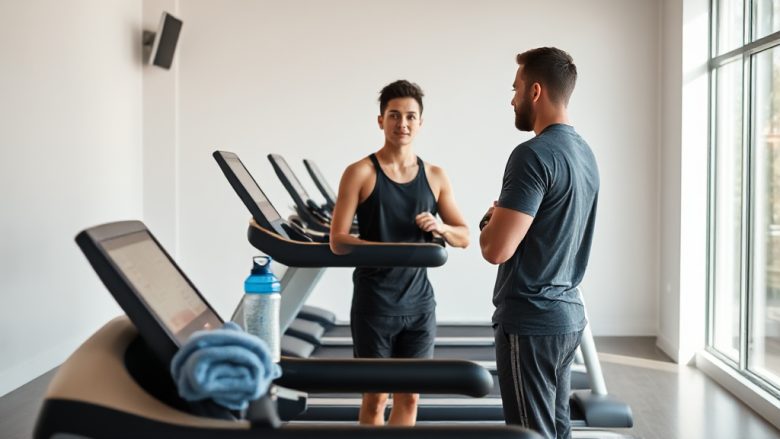
You’re standing in front of a treadmill, hand hovering over the speed buttons, and you genuinely don’t know whether to pick 4.0 or 6.0. The person on the machine next to you is running like they’re being chased. You just want to walk without looking clueless. That moment — the one right before you press start — is exactly where most first-timers freeze, and it’s also where this cardio workouts checklist for first timers begins. The goal here isn’t to turn you into a runner by Friday. It’s to remove the guesswork so you can walk in, do something useful, and walk out without wrecking your knees or your confidence.
Here’s the honest version: your first cardio session doesn’t need to be hard. It needs to be repeatable. A workout you can do three times this week beats a heroic one you can’t face again until next month. So think of everything below as a set of small decisions you make once, then reuse until they feel automatic.
Before Your Session: The Pre-Workout Checklist
Most first-timers skip this part entirely, then wonder why the first ten minutes feel awful. A little preparation changes the whole experience.
Eat something small about 60 to 90 minutes before. Not a full meal. A banana, a slice of toast with peanut butter, or a small yogurt works. If you’re doing this first thing in the morning and can’t stomach food, that’s fine — just don’t arrive having eaten nothing since dinner the night before. Low blood sugar makes the treadmill feel twice as steep as it is.
Drink water, but don’t overdo it. A glass or two in the hour before is plenty. Chugging a litre right before you start will just leave you sloshing. Bring a bottle with you and sip during breaks.
Wear shoes you’d actually walk a mile in. Running shoes with a bit of cushioning are ideal. Flat canvas sneakers, dress shoes, or anything with a worn-out sole will make your ankles and shins complain by minute fifteen. If you’re not ready to buy proper shoes yet, at least pick the most supportive pair you own.
Pick your machine or route before you arrive. Decide in advance: treadmill, bike, rower, elliptical, or a simple walk around the block. Standing in the middle of a gym floor trying to choose is what makes people feel lost. Choose one, and commit to it for the whole session.
Know your starting numbers. This is the part that intimidates people most, so here’s a simple rule. On a treadmill, start at a walking pace you could hold a conversation at — usually somewhere between 3.0 and 4.0 mph, or 4.5 to 6.5 km/h. On a bike, pick a resistance where you can still talk in full sentences. On an elliptical, start at the lowest resistance and a comfortable stride. You are not trying to impress the machine. You’re trying to find the pace you could keep for twenty minutes without panicking.
Do a two-minute warm-up. Start slower than your target pace. Walk before you jog. Pedal easy before you push. Cold muscles and a cold heart rate make the first few minutes feel disproportionately hard, and a short warm-up fixes most of that.
During Your Session: What to Actually Do
Once you’re moving, the checklist shifts from preparation to pacing and paying attention.
Use the talk test instead of heart-rate zones. If you can speak a full sentence without gasping, you’re in an easy zone. If you can only get out two or three words, you’ve pushed into hard territory. For your first few sessions, stay in the easy zone almost the entire time. Heart-rate formulas and zone charts are useful later, but they confuse more first-timers than they help. Your breathing is a better guide right now.
Aim for 15 to 20 minutes of actual work. That’s it. Not 45. Not an hour. Your first cardio workouts are about teaching your body that this is a normal thing you do, not about burning a specific number of calories. If you feel good at twenty minutes, add five. If you’re miserable at twelve, stop at twelve and come back in two days.
Keep your posture simple. Stand tall. Don’t grip the treadmill handles like you’re holding on for dear life — light fingertips if you need balance, then let go. On a bike, keep your shoulders relaxed and your knees tracking forward, not splaying outward.
Breathe through your nose and mouth together. New exercisers often hold their breath without realizing it, especially when they start to feel effort. Deliberately exhale. If you can’t, you’re going too hard.
Watch for red flags and stop immediately if you get them. This matters more than any pacing tip. Stop the session if you feel chest pain or pressure, dizziness, faintness, unusual shortness of breath that doesn’t settle when you slow down, a pounding or irregular heartbeat, or sharp joint pain. Muscle burn is normal. Chest tightness is not. If something feels wrong in a way you can’t explain, get off the machine and sit down. If symptoms don’t pass quickly, seek medical help. There’s no workout worth pushing through that.
Give yourself permission to pause. Stopping for thirty seconds to catch your breath isn’t failing. It’s pacing. First-timers who allow breaks tend to finish the session; those who don’t often quit halfway.
After Your Session: The Cool-Down and Recovery Checklist
The workout isn’t over when the machine stops. What you do in the next ten minutes shapes how you’ll feel tomorrow.
Slow down gradually for three to five minutes. Don’t slam the stop button and walk straight to the locker room. Bring the pace down in steps — jog to walk, fast walk to easy walk — until your breathing is close to normal. This helps your heart rate come down smoothly and reduces the lightheaded feeling some people get after sudden stops.
Stretch briefly, while you’re still warm. You don’t need a long routine. Thirty seconds each on your calves, hamstrings, quads, and hips is enough. Hold gently. Stretching cold muscles hard does more harm than good.
Drink water and eat something within an hour. A glass of water and a snack with some protein and carbs — yogurt, a sandwich, a handful of nuts and fruit — helps you recover and keeps you from crashing later.
Note how it felt. Two lines in your phone is enough: what you did, how long, and how hard it felt on a scale of one to ten. Next session, you’ll know whether to repeat it or nudge it up. This tiny habit is what separates people who improve from people who plateau.
Expect soreness, but know the difference. Mild muscle soreness a day or two later is normal, especially in your legs. Sharp pain, joint pain, or pain that gets worse rather than better is a signal to rest and, if it persists, get it checked.
Rest at least one day between sessions. Your first week is not the time to go daily. Give your body a day to adapt, especially your shins, knees, and feet, which take the brunt of new cardio.
A Simple One-Week Starter Schedule
Three sessions, spaced out, is a realistic first week. Keep every session in the easy, conversational zone.
Day one: 15 minutes total — 2 minutes easy warm-up, 10 minutes at a steady talking pace, 3 minutes easy cool-down. Day three: the same structure, but 12 minutes in the middle if you felt fine. Day five: 15 minutes in the middle, and if you’re comfortable, add two 30-second slightly faster bursts with a minute of easy pace between them. That’s it. No heroics, no soreness you can’t walk off.
Frequently Asked Questions
How hard should my first cardio workout feel?
It should feel like a brisk walk you could chat through, not a sprint. On a scale of one to ten, aim for a four or five. If you’re gasping, you’ve gone too hard for a first session.
How long should I wait before increasing the intensity?
Give yourself two to three weeks at the same easy pace before adding speed or incline. Once the current session feels genuinely comfortable, increase one thing at a time — either duration or intensity, not both.
What should I do if I feel dizzy or short of breath during cardio?
Stop immediately, slow your breathing, and sit down. If it passes quickly, end the session there and rest. If it doesn’t pass, or if you had chest pain, get medical help rather than continuing.
Do I need a heart-rate monitor as a beginner?
No. The talk test works well for most first-timers. A monitor can be useful later if you want to train specific zones, but it isn’t necessary to start.
That’s the whole checklist. Prepare a little, pace yourself by breathing rather than by numbers, cool down properly, and stop when your body signals something’s wrong. Do that three times in your first week and you’ll already be past the hardest part — which was never the workout itself, but the standing-and-not-knowing.